Star Battle
One star per row, column and region, and no two stars ever touch.
28 brain-bending number puzzles, from classic Sudoku to Star Battle and Kakuro. Solve them alone, or go live against real players in ranked duels, private rooms and knockout tournaments.
The library
Every puzzle is staged from Easy to Genius. New to one? Tap it for the rules, an animated example and beginner tips.
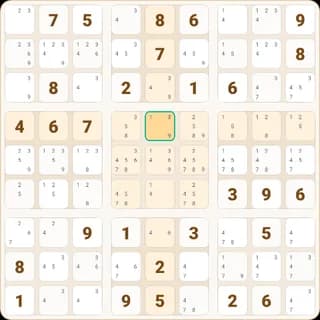
The classic. Every row, column and box holds 1 to 9 once.
How to play →
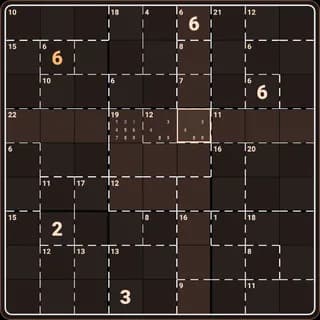
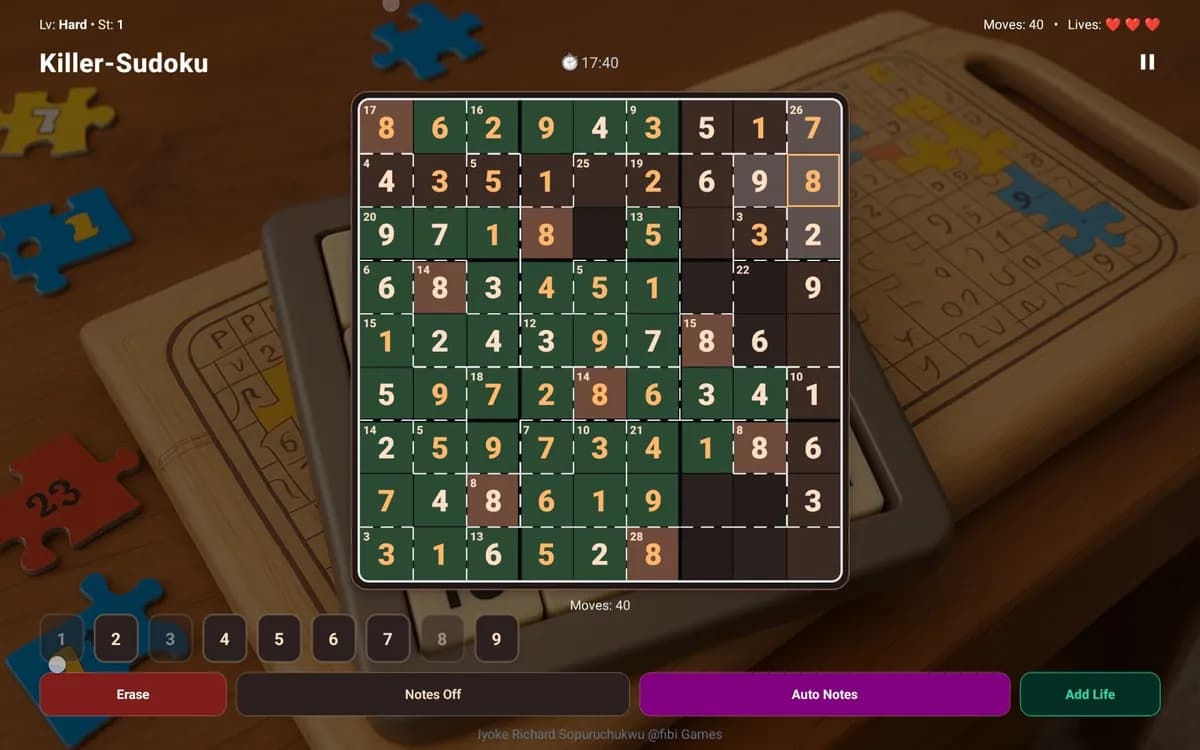
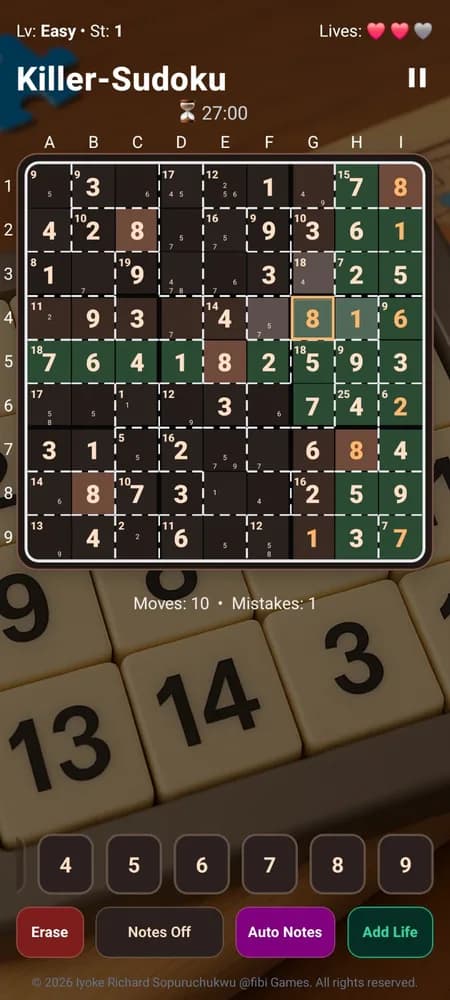
Dashed cages must add up to their clue, and no digit repeats in a cage.
How to play →
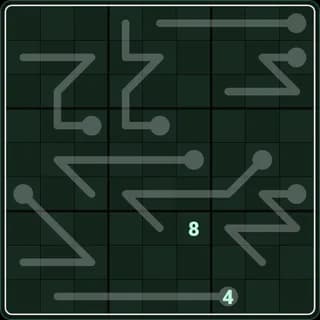
Digits climb along every thermometer from bulb to tip.
How to play →
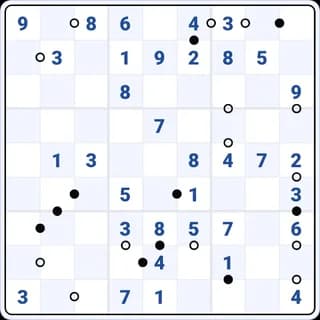
White dots join neighbours one apart. Black dots join a digit and its double.
How to play →
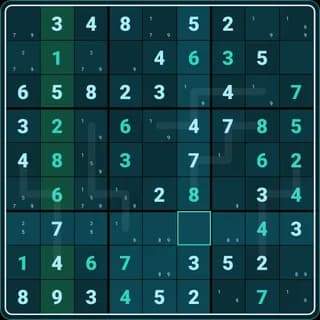
Every grey line reads the same forwards and backwards.
How to play →
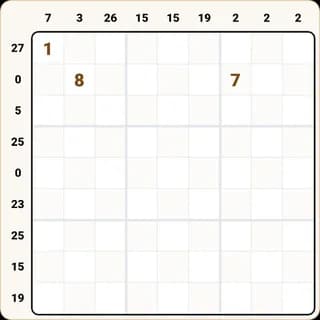
Edge clues give the sum of the digits between the 1 and the 9.
How to play →
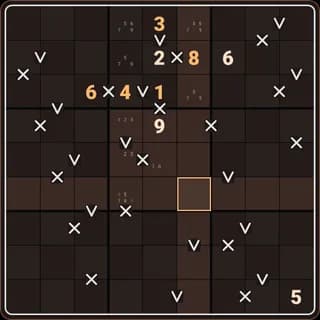
An X joins two cells that sum to 10. A V joins two that sum to 5.
How to play →
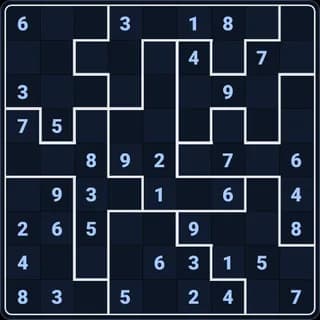
Sudoku rules with the boxes swapped for jigsaw-shaped regions.
How to play →
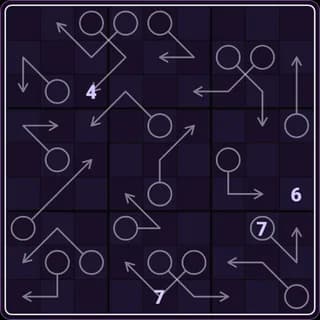
The digits along each arrow add up to the circle it starts from.
How to play →
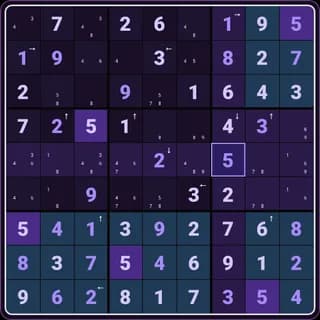
Each arrow cell's digit says how many steps away the 9 is.
How to play →
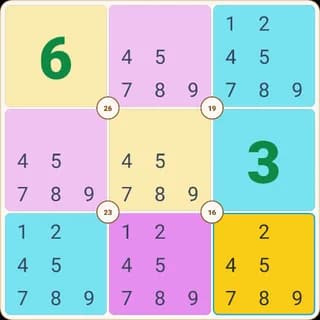
A compact 3×3. Each circle is the sum of the four cells around it.
How to play →
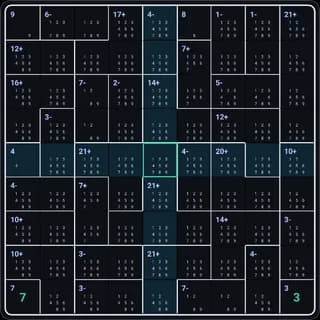
Cages with a target and an operator. Make the maths work, no repeats.
How to play →
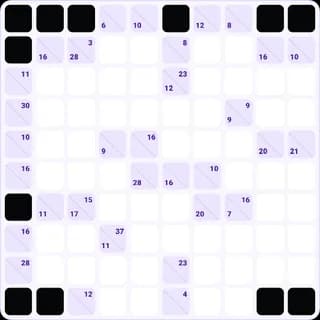
A crossword made of sums. No digit repeats within a run.
How to play →
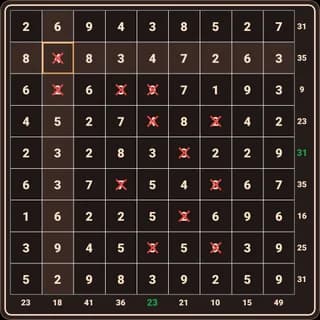
Delete numbers until every row and column hits its target.
How to play →
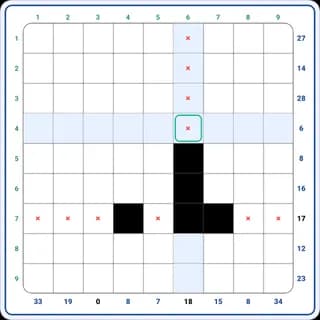
Shaded cells score their position. Hit every row and column total.
How to play →
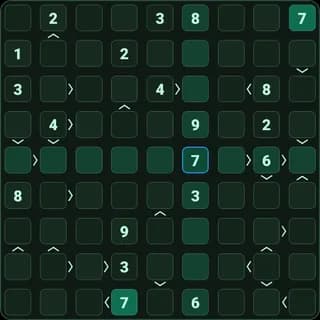
A Latin square with greater-than signs between neighbours.
How to play →
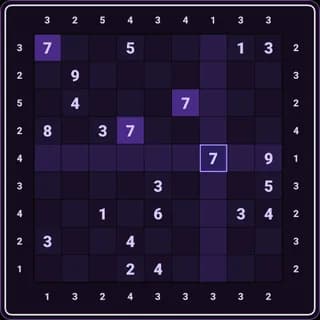
Place towers. Edge clues count how many you can see from there.
How to play →
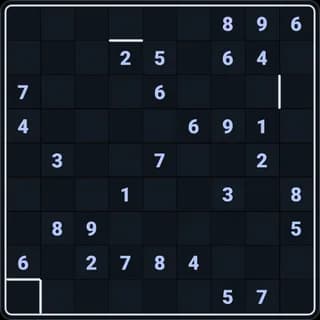
Walls split rows into segments. A segment of n cells holds 1 to n.
How to play →
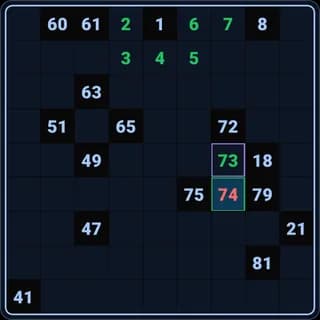
Thread 1 to the last number through neighbouring cells.
How to play →
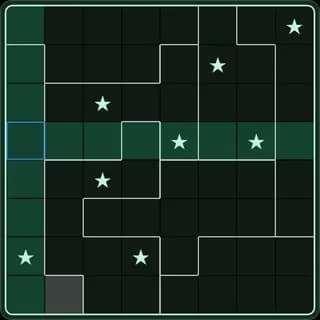
Two stars in every row, column and region, and stars never touch.
How to play →
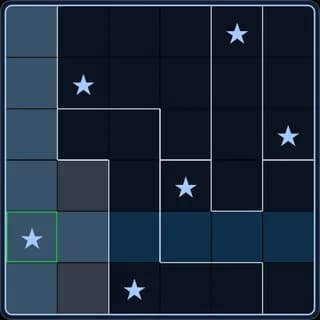
The gentle start: one star per row, column and region.
How to play →
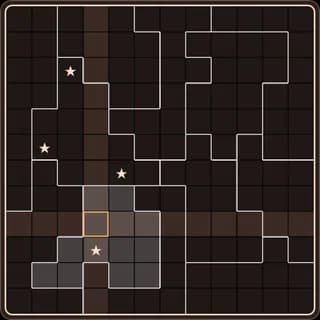
Three stars per line on a big board. For the brave.
How to play →
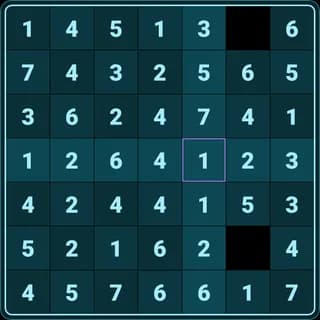
Shade the repeats away. Shaded cells never touch, white cells stay connected.
How to play →
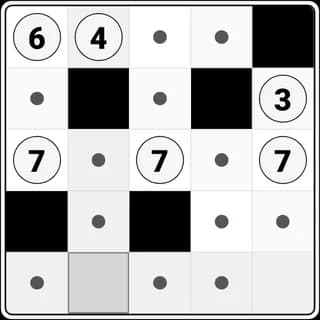
Each number counts the white cells it can see in four directions.
How to play →
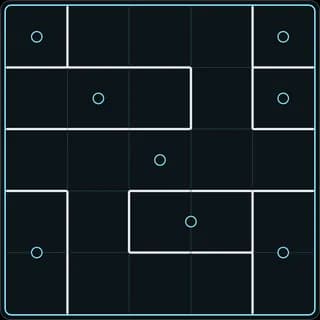
Split the board into galaxies that spin symmetrically around their dot.
How to play →
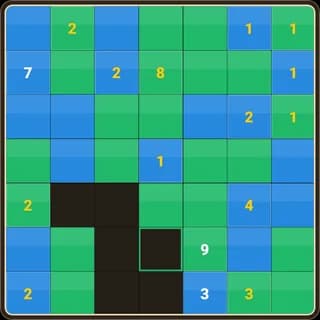
Paint every cell green or blue. Each field holds exactly one clue.
How to play →
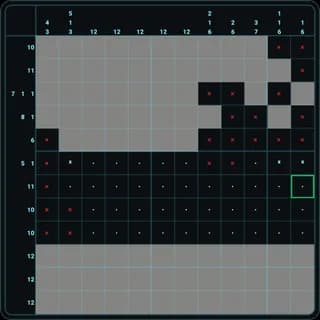
Row and column clues paint a hidden picture, cell by cell.
How to play →
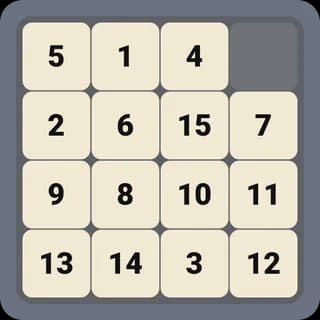
Slide the tiles back into place. Pictures, numbers, your call.
How to play →
See it in motion
Every puzzle has its own rules and its own “aha”. Here are three of them, solving themselves.
One star per row, column and region, and no two stars ever touch.
The numbers are runs of painted cells. Follow them and a picture appears.
Memorise the picture, watch it shatter, then slide every tile home.
The online arena
Every online mode is free to play. Your coins are only ever spent offline.
Your level is earned per puzzle, so a Sudoku master can still be a Kakuro rookie.
Make it yours
Neon for late nights, paper for bright days. Every puzzle has its own theme picker, and your choice is remembered.
Built for players
The small things that keep you in the zone, from the first easy board to your hundredth Genius clear.
Five difficulty levels on every puzzle, each one a ladder of stages. Clear a board, unlock the next, and keep climbing.
Jot candidates, whittle them down, commit when you're sure.
Three lives per board keep the pressure honest, and a hint is there when you're truly stuck.
Solo puzzles work anywhere: on the train, on a plane, in the middle of nowhere.
Back up your progress and pick up where you left off on a new phone.
On a tablet or Chromebook? Plug in a keyboard: type digits, move with the arrows, click any cell.
Lost by a second? Ask for a rematch and go again on a fresh board.
Where to play
The game lives in the app. This site is just the shop window.
Google Play
App Store
Free to download. No account needed to play offline, and online play never costs a coin.